Worship Service – Sunday, July 19, 2026
So, our joke for the day is one of my favorites. I think I’ve told it before, but I just—I don’t know. I just think it’s great. And when we’re getting close to blessing of the angels, this is part of—uh, I love animals. Anyways, a German shepherd, a Doberman, and a cat died in heaven.
They faced God who wanted to know what they believed in. The German shepherd said, “I believe in discipline, loyalty, and training to my master.” God said, “Good,” said God. “You may sit on my right side.” The Doberman said, “I believe in love, care, and protection of my master.” “Aha, you may sit on my left side,” said God.
Then God looked at the cat and said, “What do you believe in?” The cat replied, “I believed you are sitting in my seat.” That’s cats. I love that one. It’s one of my favorites.
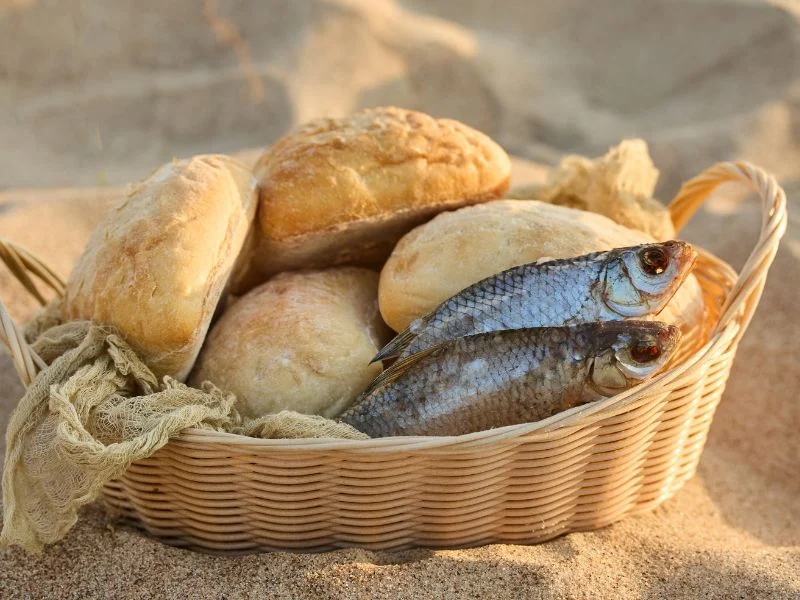
Shepherd and Savior is our theme. So today we are still looking to the event of the feeding of the 5000. Just to recap, last week we clarified that in the Gospel of John, it did not say that the young boy gave his lunch consisting of five loaves of bread and two fish.
Many of us may have heard it that way or been taught that it was the boy’s lunch that he gave to Jesus. But as we looked closer last week at that event, it was more obvious that the boy had trusted Jesus with something that was more likely precious to him and his family. At, as that miracle unfolds, we see not only did everyone walk away full from five loaves of bread and two fish, but there were 12 baskets left over.
So maybe the boy took the—a basket home and was able to feed his family after giving Jesus all that he had.
So we just met—read Mark 6:39. What’s Jesus doing? He’s directing his disciples to have all the people sit down in groups on the—what does it say?—green grass. I’ve never paid much attention to this verse, but notice it says green grass. It’s very descriptive, isn’t it?
So, why is this in the word of God? Why do we need to know the grass was green? Do you know the grass is green, right? Who cares, right? So, the grass is green. Ah, but God has his reasons as always. The Lord says, “I want to share something beautiful with you all.”
So again, I ask, why do we need to know that the grass is green? Because he wasn’t describing the grass. He was introducing the shepherd. Say what? Confusing, right? I will explain.
Now, a few verses earlier, we heard what—uh, let’s see, Sylvia read. It says, “Jesus looked at the crowd and had compassion on them because they were like sheep without a shepherd.” We just read that verse in the New Testament, right, Lena? Just read it. It goes on to say that he teaches them. Then he tells them to sit down on the green grass. Here we got green grass again. Now sitting on the green grass—that might sound kind of familiar.
We just read something about green grass, green pastures, right? Haven’t we heard that somewhere else in the Bible? Didn’t we just hear that this morning? How about Psalm 23? How about verse 1 and two? “The Lord is my shepherd. I shall not want. He makes me lie down in green pastures.”
Green grass. Wow, this is crazy, right? We’ve got green grass, green pastures in the Old Testament and green grass in the New Testament.
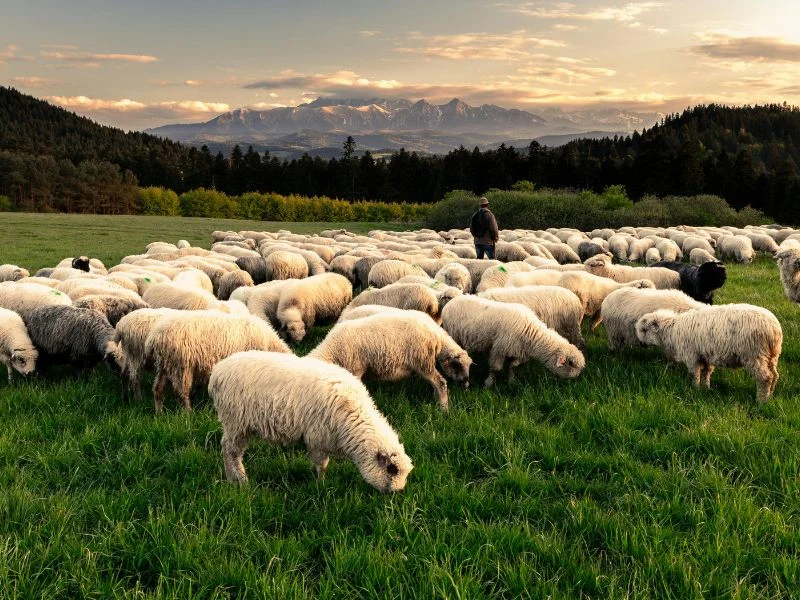
This event of the feeding of the 5000 isn’t just a miracle about multiplying the bread and the fish. It’s a picture of a living song. A shepherd has his sheep. The shepherd has gathered his flock. The shepherd has led them to green pastures, green grass. Jesus the shepherd gave himself—them, himself—before he gave them food.
Right? He preached to them. Isn’t that what we want most? Not a pile of food. We, like those people back then, we need a shepherd because food—what does food do? It fills us up for a day or for a moment. A shepherd keeps leading us tomorrow, the next day, and the next day, and the next day after, and so on.
Anyone here can hand out food, but the shepherd is the only one who knows where the next pasture is. You know, maybe that’s why so many of us are spiritually exhausted. We’ve been chasing what God can provide instead of acknowledging his presence. At times we want what he could give more than where he wants to lead us. Sheep don’t survive because they know where the green grass is. They survive because they stay close to the shepherd.
A lost sheep doesn’t need greener grass. A lost sheep needs to be found. Once the lost sheep is found, its greatest responsibility isn’t to figure anything out. It’s simply to stay close to the shepherd. Because the safest place isn’t where the green grass is, it’s wherever the shepherd is. Isn’t that where we want to be? Not out looking for greener pastures, but hanging with the shepherd who protects us, feeds us, leads us.
I find it amazing as we—or I—delve deeper into the scriptures, we find little things that we didn’t think were significant, and they’re very significant. I’m always amazed at how the Old Testament and the New Testament coincide with each other. Every time we read of the events of the Bible, we will find more and more of what God is teaching us in the simple words. The more we study the Bible, the closer we get to our shepherd.
As some of you may know, and as I said earlier, the jam band played our first gig at the loft. Now, I keep forgetting what the loft means. It’s Living Out Faith Together. Just by chance, two of our songs represented the 23rd song. So, as we follow our savior and stay by his side while he leads us to green grass, remember these words from the chorus of one of our songs that the jam band sang. It’s a great song. Some of you may have heard it.
It’s: “Oh death, I will not be afraid. In the end, you will lose. I will dance on your grave with the one who buried you. You ain’t nothing but a stone that my savior rolled away, set you straight and set you free. Oh death, you are dead to me.”
So we have to remember as we’re out there in the world today and we’re looking for those—that green grass, we’re not going to find it. Why? We’re not going to find it because we don’t have the shepherd. We need the shepherd that is Jesus to guide us. Amen.